NO
|
NAME
OF ITEMS
|
FUNCTION
|
1
|
SERVICE
PLATE
 |
The service plate is the largest plate. Service plates range in
size from 11 to 14 inches across.
The service plate is laid in the center of the cover before the
diners come to the table, but the way it is used is different for formal and
informal dining. At a formal table, the service plate decorates the cover and
the rim should frame the appetizer plate with a surround of no less than one
inch.
In formal dining, food is never
placed directly on a service plate. Rather, the service plate is a base on
which to lay the plate for the appetizer course and is cleared from the table
after the first or second course is finished. Since soup splatters, the
service plate is soiled easily, and at the end of the course it is cleared
from the table with the soup plate. Because there should never be an empty
space before a guest, after the service plate and soup plate are cleared, the
plate for the next course is laid on the table immediately. But when the meal
begins with a cold first course, such as fish, followed by a hot course of
soup, the fish plate is removed at the end of the first course, and the
service plate is left on the table to hold the soup plate. At the end of the
soup course, the service plate and soup plate are cleared together, and
exchanged immediately for the plate on which the next course is served.
informal meal, the service plate is an optional accoutrement of dining.
Although traditionally the purpose of the service plate is to hold the plate
for the appetizer course, at an informal meal it is used in whatever way
makes sense, as a dinner plate, buffet plate, placemat, or platter. When it
is used in the traditional sense, it is laid on the table in advance of
seating and should set the mood for the occasion. Oftentimes, dinner plates
are used as service plates to hold a first course.
Service plates are known by a
host of names - buffet plate, charger plate, cover plate, lay plate, and
place plate.
|
2
|
DINNER
PLATE
 |
The dinner plate is used more
than any other plate. It is used to serve the main course at all meals,
formal and informal. Modern dinner plates measure from 10 to 11 inches
across.
At a formal dinner in a private
residence, the entree is the third appetizer course, such as a creamed
chicken in vol-au-vent cases, and as such is served on a medium-size plate,
notably a salad plate. But in a restaurant, the main course often follows two
appetizer courses, usually soup and salad. Typically, the entree consists of
cooked meat served with vegetables, starch, and garnish, and as such is
served on a dinner plate.
|
3
|
LUNCHEON
PLATE
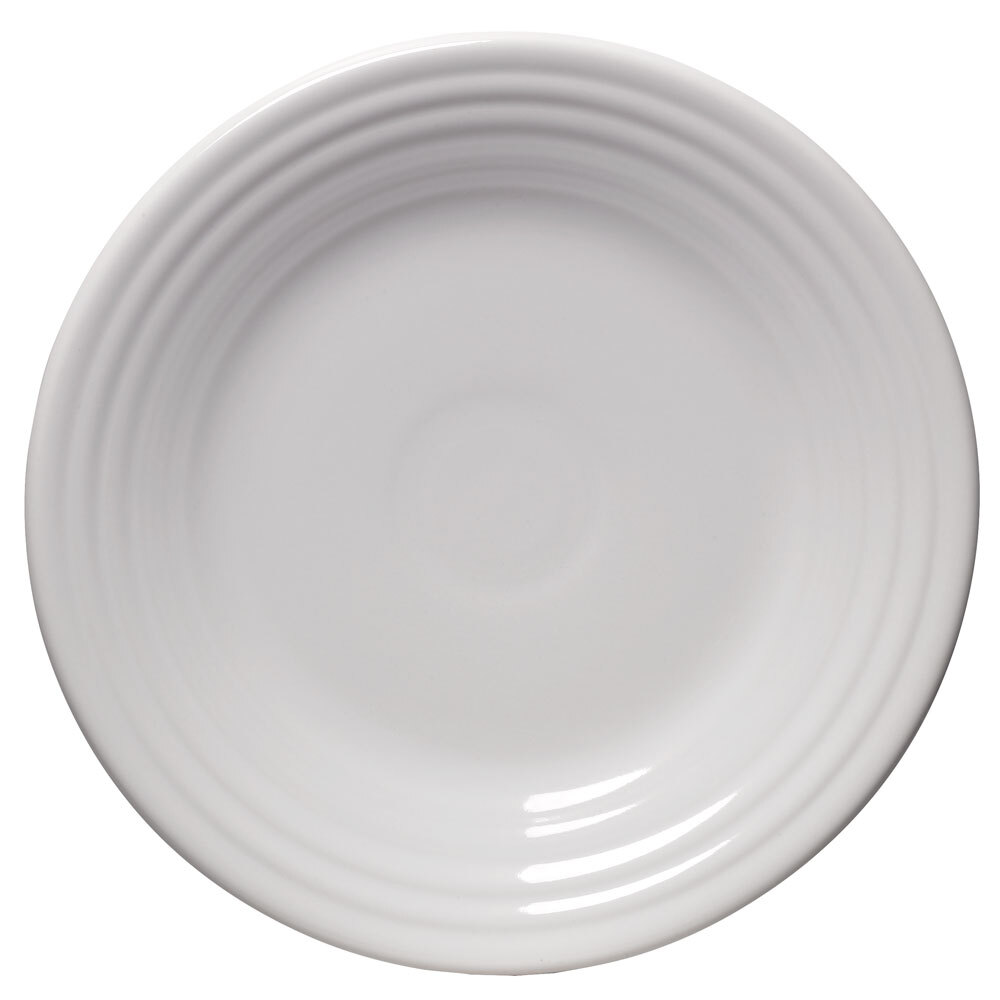 |
Luncheon is lighter, simpler
meal than dinner, a repast served on a plate about 9 to 9.5 inches in
diameter. Although the luncheon plate is used for formal and informal meals,
it is not essential for either occasion.
|
4
|
ROUND
SALAD PLATE
 |
The round salad plate is made
in two sized. The larger salad plate is about 8 to 8.5 inches in diameter,
the smaller 7 to 7.5 inches.
At a formal meal, the salad
plate is laid before the guest after the main course is cleared, an arranged
salad is presented to the diner on a platter. At an informal meal, the salad
plate functions to serve salad presented before the main course, as a side
dish with the main course, or following the main course to stimulate the
palate. But when salad is the main course, it is presented on a dinner plate.
|
5
|
FISH
PLATE
 |
The fish plate is a specialized
plate about 8 to 9 inches in diameter. It is not made as part of a dinnerware
set, but is recognizable by ornamentation in a fish pattern. The fish plate
is not essential for formal or informal meals; when served as an appetizer,
fish is presented on any medium-size plate, such as a salad plate or a
dessert plate. If fish is the main course, it is presented on a dinner plate.
|
6
|
DESSERT
PLATE
 |
Dessert plates are ornately
decorated. They are specialized plates about 7.25 to 8.5 inches in diameter,
used at formal and informal meals, and made not as part of a dinnerware set.
|
7
|
CHEESE
PLATE
 |
Cheese plates are recognized by
ornamentation in a cheese pattern. They are specialized plates about 7.25
inches in diameter, used at formal and informal meals, and made not as part
of a dinnerware set.
|
8
|
FRUIT
PLATE
 |
Fruit plates are recognized by
ornamentation in a fruit pattern. They are specialized plates about 6.25 to 8
inches in diameter, used at formal and informal meals, and made not as part
of a dinnerware set.
|
9
|
BREAD-and-BUTTER
PLATE
 |
The bread-and-butter plate is
used to separate bread and butter from sauce, gravy, and juices that emanate
from foods on the plate. Although the bread-and-butter plate is optional at
formal dinners in Europe, in a private residence in North America it is not
laid on a formal dinner table because the menu is planned to provide sufficient
tast and texture without the need for bread and butter. Thinly sliced melba
toast may be passed with soup, fish may be served in a pastry shell, and
toasted crackers are passed with cheese, along with butter at room
temperature. when dry toast and crackers are served at a formal dinner, they
are placed on the tablecloth. However, at a formal dinner in a restaurant or
club, bread is often provided to cleanse the palate between different wines
and to tide one over during long lapses between courses.
Bread and butter are served at
informal meals and luncheons. When a plate is not provided for a slice of
bread or a roll, it is laid on the tablecloth or rim of the dinner plate,
where the butter is also placed.
|
10
|
FRUIT
SAUCER
 |
Known also as a fruit dish, side
dish, or berry bowl, the fruit saucer is a small shallow dish about 4 to 6
inches in diameter by 1 inch deep. The purpose of a fruit saucer is to
separate juices that flow from raw or cooked food from other foods. Because a
formal meal is served course by course, side dishes are not used, and a fruit
saucer is provided only at informal meals.
|
11
|
MUG
 |
The mug is heavier than a cup,
the walls are thicker and the base is denser. To retain heat, the mug is
taller than a cup, made in regular and extra large sizes. Regular-size mugs
are approximately 3 to 4 inches in height by 3 ½ inches across, a vessel with
a volume capacity of around 8 to 10 fluid ounces when filled almost to the
rim. Extra large mugs are the American counterpart of the European breakfast
cup, a shape about 4 inches in diameter or more, a size that holds
approximately 15 to 20 fluid ounces. To accommodate the shape of the mouth,
the mug often flares outward at the rim.
The mug is used only for
informal dining.
|
12
|
TEACUPS
 |
Tea is a beverage cooled
slightly before drinking, and to release heat, the teacup is slightly shorter
and a little wider than the coffee cup, a shape approximately 3 ¼ to 3 ¾
inches in diameter by 2 to 2 ½ inches in height. The companion saucer
measures about 5 ¼ to 5 5/8 inches across. To accommodate the shape of the
mouth, the rim of the teacup is often flared outward, a form derived from the
beaker (from the Latin beccus, for "bird's bill").
Although the teacup is used at
informal meals, the flavor is too delicate to follow a heavy multi-course
meal, and tea is not served at formal dinners and at formal luncheons only upon
request
|
13
|
COFEE
CUP
 |
Coffee is a beverage served
from early morning to late evening, and the size of the cup is determined by
the time of day it is taken, along with the strength of the brew. Coffee with
a brisk taste, a light body, and a high caffeine content is served as a
stimulant, notably at breakfast and lunch, in a large cup. Coffee with a
strong taste, heavy body, and a low caffeine content is served as a digestive
following a multicourse meal, such as after dinner, in a small cup.
Coffee is at its peak flavor
when served extremely hot. To conserve the heat, the cup features a cylinder
shape, taller than wide, a size approximately 2 ½ inches in height by 3
inches in diameter. The companion saucer measures around 6 to 6 ½ inches
across.
The coffee cup is made in three
sizes, namely, the regular-size coffee cup, the after-dinner coffee cup, and
the demitasse cup. The regular-size coffee cup is used at informal meals, the
after-dinner coffee cup at elegant informal affairs, and the demitasse cup at
formal occasions.
After-dinner coffee is a
strong-flavored brew with a low caffeine content served to stimulate
digestion at an elegant multi-course meal. The smallish cup measures
approximately 2 3/8 inches in height by 2 ½ inches in diameter and holds approximately
3 ounces. The companion saucer is about 4 ¾ to 5 inches across. Rather than
interrupt good conversation and take coffee in another room, after-dinner
coffee is often served at the dinner table.
|
14
|
DEMITASSE
 |
Demitasse is a heavy-bodied
brew with a strong taste and low caffeine content. It is served to aid
digestion and dispel the lingering effects of alcohol after a formal dinner
where several wines are served. Demitasse means "half cup" in
French, and the cup is approximately 2 ¼ inches in height and width, slightly
shorter and narrower than the after-dinner coffee cup. The companion saucer
measures about 4 ½ to 5 inches across.
Guests at a formal dinner are
seated at the table for hours, so in order to provide them with the
opportunity to stretch and regroup, and to revive conversation, demitasse is
presented in another room. The cup is filled half full (approximately 1.5
ounces). Customarily, at a formal affair, demitasse is followed by brandy or
liqueur; entertainment-dancing or cards-may then commence. A second cup is
not offered.
At an informal meal, demitasse
is served away from the table, wherever is convenient.
|
15
|
CHOCOLATE
CUP
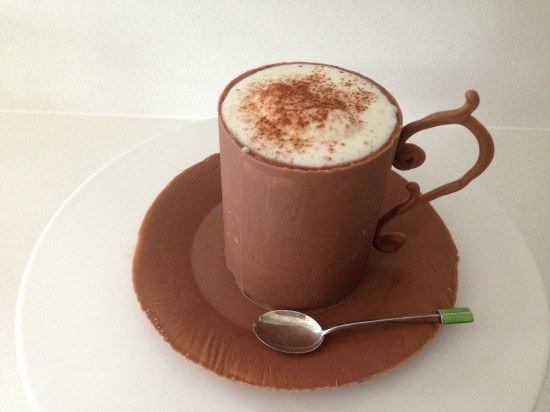 |
Originally hot chocolate was a
breakfast drink made from unsweetened chocolate mixed with cream, a mix beaten
into a thick paste. Just before serving, sugar and hot frothy milk were
added. To accommodate demand, in the second half of the eighteenth century
the morning chocolate cup was larger than a coffee cup or teacup. However,
the thick paste was slow to pour, and at social affairs in the afternoon, hot
chocolate was served in small narrow cups about 3 inches in height by 2 ½
inches in diameter. The companion saucer measured approximately 4 inches
across.
Today, hot chocolate is made
from powdered cocoa, a thinner beverage than the original drink; it is served
in a large vessel, such as a coffee cup, teacup, or mug. Small chocolate cups
purchased in specialty stores are not made as part of a dinnerware set
|
16
|
SOUP
PLATE
 |
Wide, shallow bowl with a
flanged rim. Diameter is approximately 9 to 10 inches, the rim is 1 to 2
inches wide, the depth is up to 1 ½ inches deep, and the well is 6 to 7
inches across.
The only soup bowl used in
formal dinner service.
|
17
|
CREAM
SOUP BOWL AND SAUCER
 |
·
4 to 5 inches in diameter
·
Use to serve a first course of pureed soup
at meals with a light menu
|
18
|
BOUILLON
CUP AND SAUCER
 |
3 ¾ inches in diameter and
features a companion saucer about 5 1/ 2 inches across.
Bouillon is drunk entirely from the cup or sipped from a spoon, one or the other but never both (that's bad table manners!). To test the temperature, a single sip is taken from the spoon. When bouillon is drunk from the cup, the cup is held by one or both of the open-loop handles, whichever is more comfortable. |
19
|
LUG
SOUP BOWL
 |
4½ to 5½ inches in diameter and
2½ inches deep.
Built to withstand oven
temperatures, the lug soup bowl is used to present an individual serving of
French onion soup put under the broiler to melt cheese, and is also known as
an onion soup bowl.
|
20
|
COVERED
SOUP BOWL
 |
Keeps soup hot from kitchen to
table.
Table etiquette requires that guests remove the lid, rest the cover, rim side down, on the side of the underplate, and replace it before the table is cleared. 4 ½ to 6 ½ inches across, and the depth is approximately 2 to 3½ inches. It is narrower and deeper than a soup plate, a coupe soup bowl, or a soup-cereal bowl. |
21
|
RAMEKIN
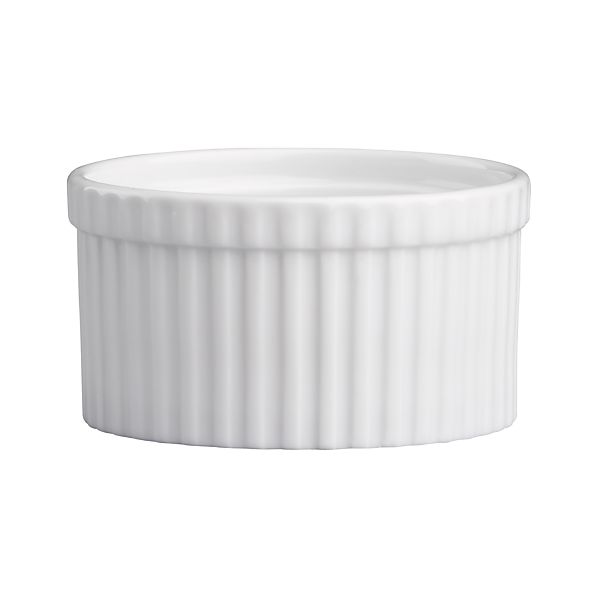 |
Made to serve baked dishes
composed largely of cheese, milk, cream, such as custard, flan, crème brulee,
or cheese soufflé
|
22
|
FINGER
BOWL
 |
4 inches in diameter by 2 ¼
inches high, a bowl used to rinse the fingertips only, and filled with just
enough water to cover them. Dining etiquette for using a finger bowl: To
prevent water from overflowing the bowl, the fingertips are rinsed one hand
at a time and wiped on a napkin held low in the lap.
|
23
|
OVAL
PLATE
 |
To serve foods likes roast,
fish
|
Friday, December 26, 2014
Chinaware

Subscribe to:
Post Comments (Atom)
No comments:
Post a Comment